
Corpus Christi 18-Wheeler Port Accident Lawyer: Your Complete Guide to Filing a Claim
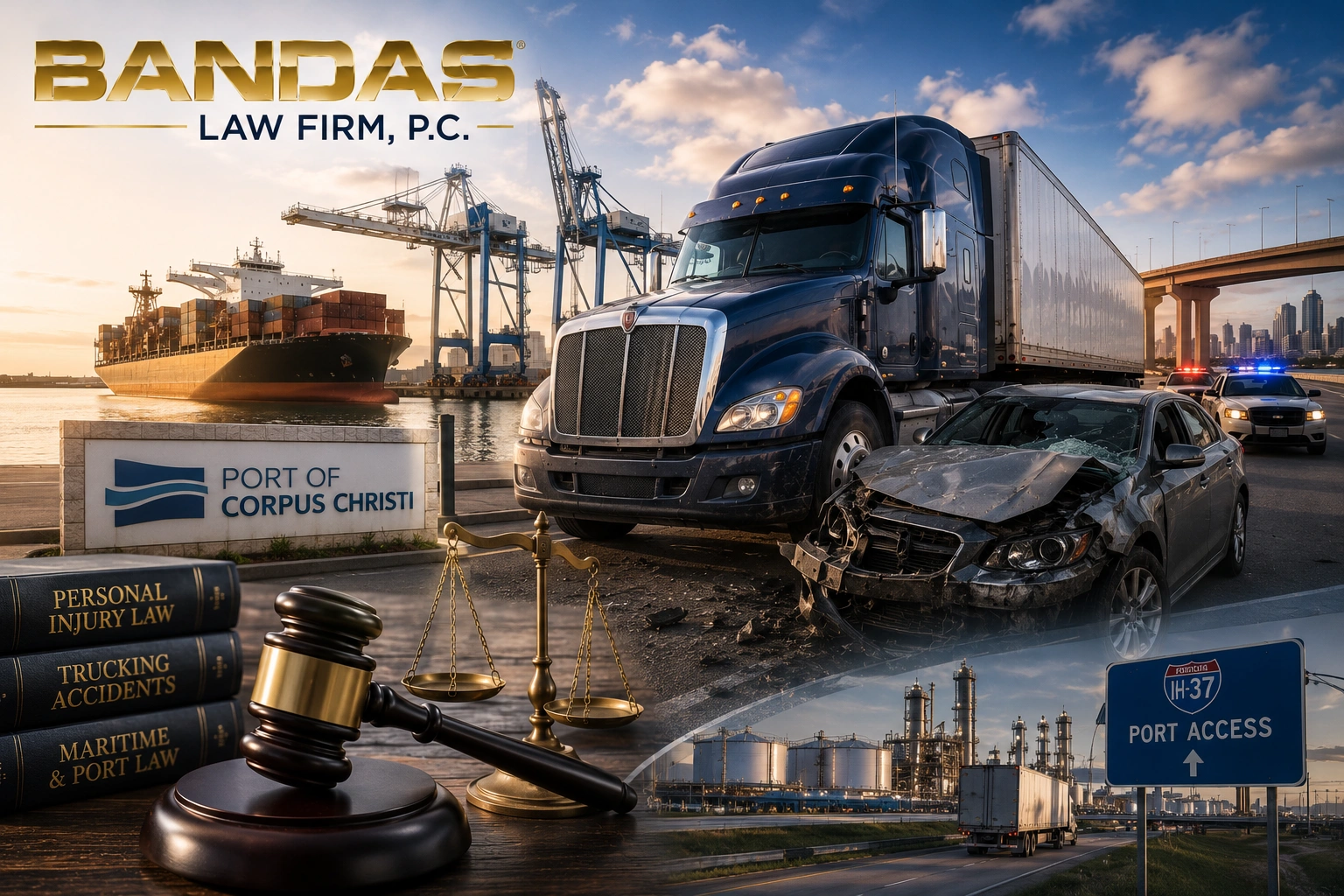
The Port of Corpus Christi is one of the busiest deepwater ports in the United States, moving crude oil, refined fuels, grain, and containerized cargo in and out of South Texas around the clock. That constant flow of commerce depends on a nonstop stream of 18-wheelers, tanker trucks, and drayage rigs traveling between terminals, refineries, rail yards, and highways such as IH-37, Highway 181, and the Joe Fulton Corridor.
When one of these massive commercial vehicles is involved in a crash, the results are rarely minor. If you or someone you love has been injured in a collision involving a semi-truck, tanker, or drayage vehicle near the port, a Corpus Christi 18-wheeler accident lawyer can help you understand your rights, identify every liable party, and pursue full compensation for your injuries and losses.
Why You Need a Corpus Christi 18-Wheeler Port Accident Lawyer
Port-related trucking accidents are often more complicated than an average car crash. Multiple companies can be involved in a single shipment, including the trucking carrier, the driver, the shipping line, the terminal operator, and the freight broker who arranged the load. Each of these parties carries its own insurance, and each will have adjusters and attorneys working to minimize what they pay out.
Evidence such as electronic logging device data, weigh station records, and terminal gate logs can disappear or be overwritten within days of a crash. A Corpus Christi 18-wheeler port accident lawyer knows how to move quickly to preserve this evidence, identify every responsible party, and build the strongest possible claim on your behalf.
At Bandas Law Firm, we offer a free, no-obligation consultation, and you pay nothing unless we win your case. Call (361) 238-2789 to speak with our team today.
18-Wheeler and Port Trucking Accidents by the Numbers
Heavy trucks connected to port and industrial operations move enormous volumes of freight through Corpus Christi every day, and that volume brings real risk to everyone else on the road.
The chart below illustrates the most commonly cited causes of 18-wheeler and heavy-truck accidents linked to port and industrial trucking operations in the region.

Figure 1: Percentage of 18-wheeler and port-related trucking accidents attributed to each leading cause.
- Driver Fatigue (28%): Port carriers often push drivers to complete tight turnaround windows between terminals, refineries, and rail yards, leading to dangerously long hours behind the wheel.
- Distracted Driving (22%): Phones, dispatch tablets, and paperwork pull a driver’s attention away from the road for critical seconds inside a vehicle that can weigh 80,000 pounds.
- Improper Cargo Loading or Securing (18%): Containers, tankers, and bulk freight that are loaded unevenly or secured improperly can shift suddenly, causing rollovers or loss of control.
- Poor Vehicle Maintenance (14%): Brake failures, worn tires, and neglected inspections are common among trucks that run constant short-haul routes with little downtime.
- Speeding in Port Zones (10%): Drivers under pressure to hit tight delivery windows may exceed safe speeds on narrow access roads built for lower-speed industrial traffic.
- Blind Spots and Wide Turns (8%): The size of 18-wheelers creates substantial blind spots, and wide turns near intersections and terminal gates frequently catch nearby vehicles off guard.
Where These Accidents Most Often Happen Near the Port of Corpus Christi
The area surrounding the Port of Corpus Christi includes a unique mix of narrow access roads, refinery traffic, rail crossings, and highway interchanges. The chart below shows where 18-wheeler and port-related trucking accidents most frequently occur.

Figure 2: Percentage of 18-wheeler and port-related trucking accidents by location.
- Joe Fulton Corridor and Port Access Roads (30%): This heavily trafficked industrial corridor connects the port’s terminals to the highway system and sees a constant flow of container and tanker trucks.
- IH-37 and Highway 181 Interchanges (25%): High-speed merging traffic combined with heavy trucks entering and exiting toward the port creates frequent conflict points.
- Refinery Row and Nueces Bay Boulevard (20%): Tanker trucks hauling crude oil and refined products travel this stretch constantly, often alongside local commuter traffic.
- Navigation Boulevard and Container Terminals (15%): Drayage trucks moving containers to and from terminal gates must negotiate tight turns and frequent stops, increasing the risk of collisions.
- Harbor Bridge and Downtown Routes (10%): Trucks crossing into downtown Corpus Christi encounter older infrastructure, tight lanes, and pedestrian traffic not designed for heavy truck volume.
Why the Port of Corpus Christi Sees Unique Trucking Dangers
The Port of Corpus Christi is not a typical commercial hub. It is one of the largest crude oil export ports in the country and sits alongside a dense cluster of refineries, chemical plants, and rail yards. This creates a traffic environment unlike most cities, where 18-wheelers, tanker trucks hauling hazardous materials, rail traffic, and everyday passenger vehicles all share the same narrow roads.
Many of the access roads leading to the terminals were not originally built to handle today’s heavy-truck traffic volumes, and blind curves, uncontrolled intersections, and aging infrastructure increase the danger. When a crash occurs in this environment, it often involves hazardous cargo, multiple vehicles, or catastrophic force due to the vehicles’ size and speed.
Federal and Texas Trucking Regulations That Apply to Port Carriers
Commercial trucking companies operating in and around the port must comply with a web of federal and state regulations designed to keep everyone on the road safe. When a carrier violates these rules, that violation can become powerful evidence of negligence in your claim.
FMCSA Hours-of-Service Rules
The Federal Motor Carrier Safety Administration limits how many hours a commercial driver may operate before taking a mandated rest break. Port and drayage drivers making multiple short trips per day are sometimes pushed past these limits to keep cargo moving, and electronic logging device records can reveal these violations after a crash.
Cargo Securement and Weight Limits
Federal regulations set strict standards for how cargo must be loaded, distributed, and secured, along with maximum weight limits for trucks traveling on public roads. Overloaded trailers or improperly secured containers are a frequent cause of rollovers and cargo-spill accidents near the port.
Drayage and Intermodal Carrier Requirements
Drayage companies that shuttle containers between the port, rail yards, and warehouses must meet additional intermodal safety and equipment standards. Chassis and container connections that are not properly inspected or maintained can fail while a truck is in motion, causing the load to separate from the cab.
Determining Liability After an 18-Wheeler Port Accident
Because so many parties are typically involved in port-related freight movement, determining who is legally responsible after a crash requires a thorough investigation. A Corpus Christi 18-wheeler port accident lawyer will examine every link in the shipping chain to identify all potentially liable parties.
The Truck Driver
A driver who was fatigued, distracted, speeding, or otherwise careless behind the wheel can be held personally liable for the harm they cause, in addition to any liability that extends to their employer.
The Trucking or Drayage Company
Trucking and drayage companies can be held liable for negligent hiring, inadequate training, unrealistic scheduling demands, or failing to maintain their fleet. If a company’s policies pressured a driver to skip required rest breaks, that company may share significant responsibility.
The Shipper, Freight Broker, or Terminal Operator
Shippers responsible for loading cargo, freight brokers who select carriers, and terminal operators who manage gate and yard traffic can all be found liable if their actions or negligence contributed to the crash.
Manufacturer or Maintenance Provider
When a mechanical failure such as defective brakes, tires, or a failed chassis connection causes or contributes to a crash, the manufacturer of the defective part or the company responsible for maintenance may bear liability.
Common Injuries in Port-Related 18-Wheeler Accidents
- Traumatic brain injuries
- Spinal cord injuries and paralysis
- Crush injuries and internal organ damage
- Severe burns from fuel or chemical cargo
- Amputations
- Broken bones and multiple fractures
- Wrongful death
What to Do After an 18-Wheeler Accident Near the Port
- Call 911 and seek immediate medical attention, even if injuries seem minor at first.
- Report the accident and make sure a police report is filed.
- Take photos of the vehicles, cargo, road conditions, and any visible injuries.
- Get contact and insurance information from the truck driver and any witnesses.
- Avoid giving a recorded statement to the trucking company’s insurance adjuster.
- Keep copies of all medical records, bills, and repair estimates.
- Contact a Corpus Christi 18-wheeler port accident lawyer as soon as possible so evidence can be preserved before it disappears.
Texas Statute of Limitations for Truck Accident Claims
In most cases, Texas law gives accident victims two years from the date of the crash to file a personal injury or wrongful death lawsuit. However, if a governmental entity such as a port authority is involved, special notice requirements with much shorter deadlines may apply.
Missing any applicable deadline can permanently bar you from recovering compensation, which is why it’s important to speak with a lawyer as soon as possible after your accident.
Comparative Negligence and Shared Fault in Texas
Texas follows a modified comparative negligence rule, meaning you can still recover compensation even if you were partially at fault for the accident, as long as your share of responsibility is 50 percent or less.
Your total recovery will be reduced by your percentage of fault. Trucking companies and their insurers frequently attempt to shift blame onto the injured victim to reduce their payout, which is one more reason to have experienced legal representation on your side.
How Much Is My Corpus Christi 18-Wheeler Port Accident Case Worth?
Every case is different, and the value of your claim depends on a number of factors, including:
- The severity and permanence of your injuries
- Current and future medical expenses
- Lost wages and diminished earning capacity
- Whether hazardous cargo or chemical exposure was involved
- Property damage to your vehicle or belongings
- Pain, suffering, and loss of quality of life
Frequently Asked Questions About Corpus Christi 18-Wheeler Port Accident Claims
Do federal trucking regulations make my case easier to prove?
Yes, in many cases. Because commercial carriers are required to follow strict federal and state regulations, violations of those rules, such as hours-of-service or cargo securement violations, can serve as strong evidence of negligence in your case.
What if the truck was hauling cargo under a different company’s name than the one that hit me?
This is common in port trucking, where drayage carriers, shippers, and freight brokers are often separate companies. An experienced lawyer can trace the shipping documents, bills of lading, and dispatch records to identify every company that may share liability.
How long do I have to file a truck accident lawsuit in Texas?
In most cases you have two years from the date of the accident, though shorter deadlines may apply if a government entity is involved. It’s best to consult a lawyer promptly to protect your rights.
Will my 18-wheeler accident case go to trial?
Most truck accident claims are resolved through settlement negotiations with insurance companies, but if a fair settlement cannot be reached, your lawyer should be prepared to take your case to trial to fight for full compensation.
What does it cost to hire a Corpus Christi 18-wheeler accident lawyer?
At Bandas Law Firm, consultations are free and we work on a contingency fee basis, meaning you pay no upfront fees and owe nothing unless we recover compensation for you.
Insurance Requirements for Trucking Companies Serving the Port of Corpus Christi
Federal law requires interstate trucking companies to carry substantial liability insurance, often ranging from $750,000 to $5 million or more depending on the type of cargo being hauled, with even higher minimums required for trucks carrying hazardous materials such as crude oil or chemical products common at the Port of Corpus Christi.
These insurance requirements exist because the potential for catastrophic harm is so much greater when a fully loaded commercial truck is involved in a crash. Unfortunately, having access to a large insurance policy does not mean the insurance company will offer you a fair settlement.
Insurers routinely deploy rapid-response teams to the scene of serious truck accidents to gather evidence and statements that can later be used to minimize a claim. Having a Corpus Christi 18-wheeler port accident lawyer on your side as early as possible helps level the playing field and ensures that your rights are protected from the very first days after the crash.
Speak With a Corpus Christi 18-Wheeler Port Accident Lawyer Today
If you or a loved one has been injured in an 18-wheeler, tanker, or drayage truck accident near the Port of Corpus Christi, don’t wait to get help. Evidence disappears quickly, and powerful companies will already be building their defense.
Contact Bandas Law Firm today for a free, confidential consultation. Call (361) 238-2789 now to speak with a Corpus Christi 18-wheeler port accident lawyer who will fight to get you the compensation you deserve.
contact us
Request A Free Consultation
Fields marked with an * are required
Houston Office
Copyright © Bandas Law Firm, P.C. All rights reserved.